
Righteousness Revealed
“The just shall live by faith.” Some call the Epistle to the Romans, “Paul’s Masterpiece on Grace.” An overview and introduction.
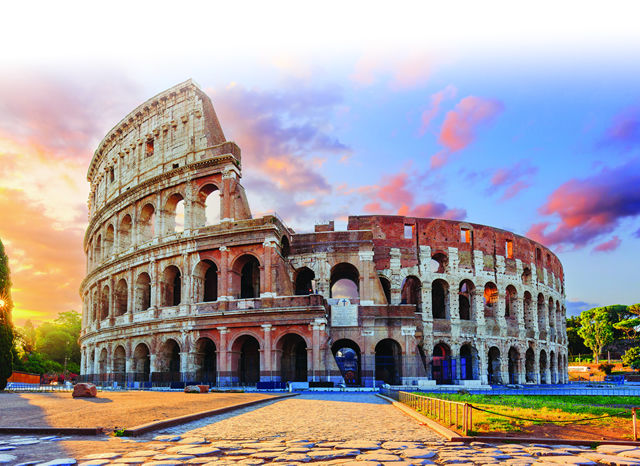
The Apostle Paul (Rom 1:1) wrote the letter to the believers in Rome around 56 AD. The city was the center of a world empire, and is believed to have had over a million inhabitants. Paul had never been to Rome up to this point, but had a strong desire to visit the believers there on His way to Spain (Rom 1:13-15; cf. 15:24, 28). Although they had already been converted, Paul wanted to lead them deeper into the teaching he had received from the Lord as his Gospel. So, in a way, this letter was to prepare them for the desired visit.
Of course, Paul couldn’t have known that his trip to Rome would play out differently than he’d planned. Instead of visiting the believers there on his way to Spain, he was brought to the capital of the Roman empire as a prisoner. Upon leaving Corinth, he first traveled to Jerusalem, bringing a gift of money (Rom 15:25). He was captured there, later brought to Caesarea, and two years later was transferred to Rome.
The Christian community in Rome was most likely founded by Roman Jews who had converted at the major event of Pentecost in Jerusalem and then returned home, where they spread the Gospel (Acts 2:5-13). Paul probably wrote the letter while he was in Corinth, and Phoebe brought it to them (Rom 16:2; cf. v. 23).
Theme
Because there was no Apostle among them, the Roman believers lacked deeper apostolic doctrines. That’s why Paul wanted to instruct them.
Romans is the first of the apostolic letters in the New Testament, which is appropriate on several levels. The Gospel truths it contains are the most fundamental, central, and exhaustive of those in the New Testament ... particularly where they concern the meaning of righteousness in Christ. It’s as if Paul has flung wide the door to God’s vast treasure troves, and he conveys them to the reader in his subsequent letters. That’s why Romans is also called “Paul’s masterpiece on grace.”
Paul wrote the letter for Jewish believers in Jesus who lived in Rome. He later visited them upon his arrival in the city (Acts 28:17-22). But the letter is also addressed to all the saints in the region, because many Gentiles had been converted to faith through the witness of these messianic Jews (Rom 1:6-7). This explains why Paul sometimes addresses Jews directly, and other times offers explanations to the Gentiles (Rom 2:1, 7; 3:1; 7:1; 9:4; 10:1; 11:1; 15:8).
“Is he the God of the Jews only? is he not also of the Gentiles? Yes, of the Gentiles also” (Rom 3:29).
The subject matter contains the truth that all people—Jew and Gentile, those with the Law and those without—are guilty before God (Rom 2:12; 3:23). The letter continues to show that God established a righteousness that is shared equally with all (Jews and the nations). It is the righteousness that the Lord Jesus has accomplished (Rom 1:16; 3:24).
Without question, Romans 1:17 is the key verse: “For therein is the righteousness of God revealed from faith to faith: as it is written, The just shall live by faith.”
The letter is organized as follows:
Chapters 1–3: Our worthless righteousness
Chapter 3: God’s all-sufficient righteousness
Chapters 4–5: Jesus, the basis of righteousness
Chapters 6–8: Righteousness that transforms us
Chapters 9–11: Israel’s own unrighteousness, and godly righteousness
Chapters 12–16: Righteousness lived out
Special Features
The letter begins by stating: “Paul, a servant of Jesus Christ, called to be an apostle, separated unto the gospel of God, (Which he had promised afore by his prophets in the holy scriptures,) Concerning his Son Jesus Christ our Lord, which was made of the seed of David according to the flesh; And declared to be the Son of God with power, according to the spirit of holiness, by the resurrection from the dead” (Rom 1:1-4).
The “gospel of God” deals with the divine revelations given to Old Testament prophets concerning Jesus as David’s descendant. These things were already known. But the letter ends very differently:
“Now to him that is of power to stablish you according to my gospel, and the preaching of Jesus Christ, according to the revelation of the mystery, which was kept secret since the world began, But now is made manifest, and by the scriptures of the prophets, according to the commandment of the everlasting God, made known to all nations for the obedience of faith” (Rom 16:25-26).
Paul’s Gospel is a divine mystery that wasn’t known in the Old Testament, but had only just now been revealed.
Our Worthless Righteousness (Roman 1–3)
“For the wrath of God is revealed from heaven against all ungodliness and unrighteousness of men, who hold the truth in unrighteousness” (Rom 1:18).
Jews have received the Law, the nations are without it, and the heathen have never heard the gospel. But all are without excuse: “Because that which may be known of God is manifest in them; for God hath showed it unto them. For the invisible things of him from the creation of the world are clearly seen, being understood by the things that are made, even his eternal power and Godhead; so that they are without excuse” (Rom 1:19-20).
This passage shows us that people suppress and distort the truth through injustice in several ways: by ungodly philosophy (1:18); by denying the visible evidence of God’s existence (1:19-20); by slandering our Creator God through the theory of evolution (1:21-23); by turning from God-given morality to unnatural acts (1:24-27); and by rejecting any knowledge of God (1:28-32). And for the Jews, it is hypocrisy to boast of having the Law and yet not follow it (2:1-17ff.).
In summary, it says, “As it is written, There is none righteous, no, not one… For all have sinned, and come short of the glory of God” (Rom 3:10, 23).
God’s All-Sufficient Righteousness (Romans 3)
“Being justified freely by his grace through the redemption that is in Christ Jesus: Whom God hath set forth to be a propitiation through faith in his blood, to declare his righteousness for the remission of sins that are past, through the forbearance of God; To declare, I say, at this time his righteousness: that he might be just, and the justifier of him which believeth in Jesus” (Rom 3:24-26).
Although we just read, “All have sinned, and come short of the glory of God,” now comes the saving message: “Being justified freely.”

How does this even happen? By grace. Grace is unearned good. It’s completely free to me. It’s available through the redemption that is in Christ Jesus, who is God’s gift of grace to us. He achieves the perfect righteousness that is given to us. It is the means of atonement, or even the place of atonement—a name also used in the Old Testament for the lid of the Ark of the Covenant. That’s why some translations use the term “mercy seat.” The high priest would sprinkle blood from the sacrifice on it on the Great Day of Atonement (Lev 16:14-16). This transformed the judgment seat of God’s holy presence into a mercy seat of forgiveness. Anyone who “believes in Jesus”—coming in faith—will experience the fullness of God’s grace (cf. Heb 4:16).
Jesus, the Basis of Righteousness (Romans 4–5)
“But to him that worketh not, but believeth on him that justifieth the ungodly, his faith is counted for righteousness” (Rom 4:5).
It isn’t our works that make us righteous, but faith in Jesus and His completed work. Paul points to two people who are examples of this.
The first is Abraham: “For what saith the scripture? Abraham believed God, and it was counted unto him for righteousness” (Rom 4:3). God had promised Abraham that he would become the father of many nations, and that he would be a blessing to all nations (Gen 15:6; Rom 4:17). Abraham believed, and this was credited to him as righteousness. Whoever shares Abraham’s faith—who was justified not by works but by faith—is justified in the same way and belongs to Abraham’s family (Rom 4:16; Gal 3:7-9, 14, 29).
The second is Adam (Rom 5:9, 12-21). Through Adam, all became sinners. Death spread to all, and all were under condemnation. In the same way, Jesus worked righteousness for all, so that everyone can enter into life.
Righteousness That Transforms Us (Romans 6–8)
“What shall we say then? Shall we continue in sin, that grace may abound? God forbid. How shall we, that are dead to sin, live any longer therein? Know ye not, that so many of us as were baptized into Jesus Christ were baptized into his death?” (Rom 6:1-3).
The one who believes in Jesus is made one with Him in death and resurrection. This doesn’t mean that Christians are perpetually dying, but that they exist in a finalized legal state to be understood spiritually: They have died to sin with Christ. This reality is depicted through the ritual of baptism. That’s why verse 11 says, “Likewise reckon ye also yourselves to be dead indeed unto sin, but alive unto God through Jesus Christ our Lord.”
But we’re now being asked to live out this proof practically in our everyday lives. We shouldn’t be sinning with an attitude of, “Well, I died with Christ…” Instead, we should no longer be sinning, having an attitude of, “I died with Christ…” We should be dead to sin and alive to Christ. We want to put to death the deeds of the flesh through the Spirit (Rom 8:13). And so, the remaining chapters of Romans are concerned with a spiritual lifestyle in contrast to a fleshly one.
Israel’s Own Unrighteousness, and Godly Righteousness (Romans 9–11)
“I say then, Hath God cast away his people? God forbid. For I also am an Israelite, of the seed of Abraham, of the tribe of Benjamin… For I would not, brethren, that ye should be ignorant of this mystery, lest ye should be wise in your own conceits; that blindness in part is happened to Israel, until the fulness of the Gentiles be come in. And so all Israel shall be saved: as it is written, There shall come out of Sion the Deliverer, and shall turn away ungodliness from Jacob” (Rom 11:1, 25-26).
Paul uses three chapters to explain God’s redemptive history with Israel. His exclamation “God forbid” (v. 1) appears ten times in Romans, regarding questions of whether God is unfaithful (3:3-4); whether God is unjust (3:6; 9:14); whether the Law is invalid (3:31); whether it is permissible to live in sin (6:1-2, 15); whether the Law is sin (7:7); whether a good thing brought death (7:13); whether God has rejected His people (11:1); and whether Israel would fall (11:11). Just as the other questions receive impossibility as an answer—“God forbid”—Israel’s rejection merits the same response.
Israel will not be rejected in the end (11:25-26). This people has been set aside for a time to make way for the Church of Jews and Gentiles, but they will be accepted again in the future (vv. 15, 23). There is already a remnant of Israel within the Church today (v. 5). Outside of the Church, Israel currently isn’t privileged over other nations in any way; it’s a state like any other. Nevertheless, Israel’s establishment as a present-day nation is certainly an act of God for a future purpose. Because if “all Israel shall be saved,” and the Redeemer comes from Zion, then Israel’s existence as a political entity is essential.
Righteousness Lived Out (Romans 12–16)
“I beseech you therefore, brethren, by the mercies of God, that ye present your bodies a living sacrifice, holy, acceptable unto God, which is your reasonable service. And be not conformed to this world: but be ye transformed by the renewing of your mind, that ye may prove what is that good, and acceptable, and perfect, will of God” (Rom 12:1-2).
We are urged to no longer offer our bodies to sin and to the world, but to God. We are to be transformed by the renewing of our minds. We could also call it renovation instead of renewal—like remodeling a home. You study catalogs, designs, paint samples… You design a new layout, imagine the result, and get to work (or have a professional do it!). You get down to business, paying for materials and labor and new appliances. The old things are taken out and the new installed.

Through engaging with God’s Word and making space for the Holy Spirit within us, we are likewise transformed. His mercies motivate us to do this. God doesn’t flog us into surrender, but loves us into surrender. Change comes through loving fellowship with Him. We’re urged on by the righteousness that Jesus has become for us. He is the basis of the justification that we have in Him, and the righteousness that takes effect through the Holy Spirit.
Our devotion to Him includes brotherly love (12:9-10ff.), submission to government authority so long as it doesn’t contradict God’s Word (13:1-7), and active readiness for Jesus’ return (vv. 8-14). We also express our devotion by not being quick to judge and condemn our neighbors (14:13). Singer Taylor Swift said, “We don’t need to share the same opinions as others, but we need to be respectful.” Christians especially can learn a lot from this. Devotion also encompasses mutual encouragement (12:15), regarding others benevolently (16:1-16), and avoiding divisions, factions, and temptations to sin (vv. 17-20).
And so, Romans reveals everything we need to know about our own worthless righteousness, God’s all-sufficient righteousness, Jesus as the basis of righteousness, the righteousness that transforms us, divine righteousness concerning Israel, and righteousness lived out.


Comments